

Samurai Armor Guides & Historical Knowledge

Hachigane (Armor Headband) by Iron Mountain Armory

Samurai Hachigane & Tatami Head Protection Guide (Hachigane, Hitaiate, Zukin)

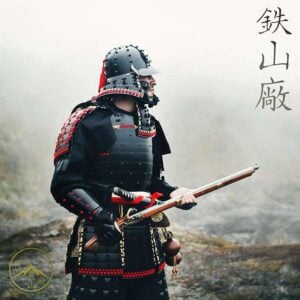
Samurai Head Protection, Field Practical The Quiet Armor of the Watchful Warrior Not every warrior walked the road in a full kabuto. Sometimes the mission demanded subtlety, comfort, and speed. That is where lighter head protection comes in, pieces like hachigane, the ita-mono hachigane, the foldable tatami hitaiate kusari, and the hooded karuta tatami zukin. Quick answer (Featured Snippet friendly): A hachigane is an armored headband worn to protect the forehead, often under a helmet or by itself when full headgear was impractical. An ita-mono hachigane is a hachigane built around a single curved plate. A hitaiate is a forehead protector, and tatami hitaiate kusari adds foldable chainmail coverage. A tatami zukin is a foldable armored hood, and a karuta tatami zukin reinforces that hood with small plates. Jump to: Definitions How They Were Worn Hachigane Ita-Mono Hachigane Tatami Hitaiate Kusari Karuta Tatami Zukin How to Choose FAQ References Looking
Read More »
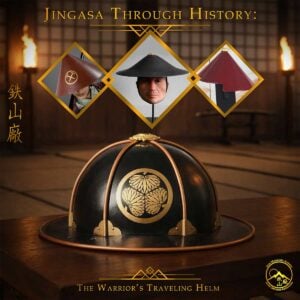
Jingasa Through History: The Warrior’s Traveling Helm

Jingasa Through History: The Warrior’s Traveling Helm

Samurai Headgear Guide The Hat of the Marching Warrior When people think of a samurai helmet, they usually picture a full kabuto crowned with a fierce crest. Yet across Japan’s long military history, warriors also relied on a quieter form of protection and identity: the jingasa, a practical “war hat” used for travel, patrol, camp duty, and certain battlefield roles. If you want to explore the broader helmet category, start here: Samurai Kabuto (Samurai Helmet) and for terminology, see: Samurai Armor Terms & Glossary . A modern man doesn’t need a battlefield to walk the warrior’s path. The point is intent, discipline, and the humility to keep learning. A jingasa is often the first step, lighter than a full helmet, historically grounded, and deeply symbolic. What Is a Jingasa? A jingasa is a lightweight military hat or helmet, historically made in materials such as iron or lacquered leather, and used

Read More »
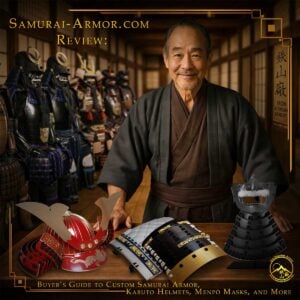
Samurai-Armor.com Review: A Buyer’s Guide to Custom Samurai Armor, Kabuto Helmets, Menpō Masks, and More

Samurai-Armor.com Review: A Buyer’s Guide to Custom Samurai Armor, Kabuto Helmets, Menpō Masks, and More

Samurai-Armor.com is built for people who want custom samurai armor and traditional Japanese clothing that feels authentic, wearable, and personal—especially for martial arts, historical reenactment, and LARP. The experience is designed around customization (with “?” tooltips that explain options), clear guidance, and the ability to build your kit over time. What the Website Specializes In The core focus is reproduction samurai armor and historically-inspired clothing and accessories, crafted with a traditional mindset and materials where possible—then refined with select modern updates that improve comfort, durability, or practicality. If you care about samurai culture and want gear that respects the look and spirit of the era, this site is intentionally built for you. It also helps that the platform is structured like an education-forward shop: instead of dumping jargon on the buyer, it directs you toward clear explanations (options, glossary terms, FAQs) so you can order with confidence. Start With an

Read More »

Menpō (Samurai Masks) Explained: History, How They Were Worn, and Every Major Style of Mengu

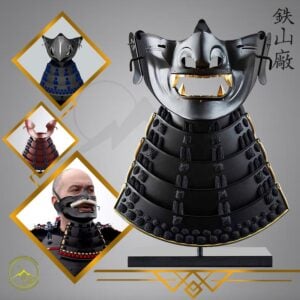
Menpō (Samurai Masks) Explained: History, How They Were Worn, and Every Major Style of Mengu Show Your War Face! Learn what a menpō is, why samurai wore mengu (Japanese face armor), how masks tied into the helmet and throat protection, and how each style differs—hanbō, happuri, hоate, menpō, so-men, sōmen, plus fierce variants like tengu menpō and ressei sōmen. What Is a Menpō? A menpō is a style of traditional Japanese mengu (samurai face armor) that covers the lower face and usually includes a laced or plated throat section. In battle it protected vulnerable facial bones and the jawline, helped guard the throat, and served a psychological role—projecting intimidation, resolve, and the warrior’s presence even before the first strike. In most armor traditions, menpō were worn with a kabuto (helmet) and were part of a bigger “coverage puzzle” that included cheek protection, throat defenses, and neck guards such as the

Read More »
Custom Samurai Armor, Clothing & Accessories

Samurai Firearms in Feudal Japan: The Matchlock (Tanegashima / Teppō) and the Wars That Changed Everything

When people picture the samurai, they imagine bow, spear, and sword—steel and spirit, not smoke and lead. Yet during the Sengoku era (Japan’s “Warring States” period), firearms became a practical, battle-winning tool. The Japanese matchlock—often called tanegashima or hinawajū, and commonly referred to as teppō in military context—reshaped tactics, logistics, and the rhythm of war. Reenactors with Tanegashima Teppō Long Rifle (matchlock gun) . Source: Wikimedia Commons (CC BY-SA). How Firearms Arrived in Japan (1543) — Tanegashima and Lord Tokitaka The most widely cited account places the matchlock’s arrival in 1543, when a vessel carrying Portuguese men (via Asian trade networks) reached Tanegashima. The island’s lord, Tanegashima Tokitaka, is said to have obtained firearms and set local craftsmen to copying the mechanism—kickstarting domestic production. Some popular retellings add vivid details, like a dramatic “shipwreck,” a demonstration shot, or personal lessons. Those specifics are best treated as later story elements; the

Read More »

Threads of Time: A Poetic Journey Through the Kimono\’s Tale

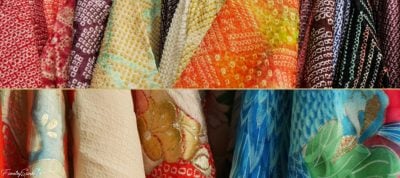
Embark on a journey through the folds of time, where fabric becomes a vessel for cultural whispers and tradition threads its way through the ages. Welcome to “Threads of Time: A Poetic Journey Through the Kimono’s Tale,” a captivating exploration of the iconic Japanese garment, the kimono. In this poetic odyssey, we unravel the intricate tapestry of history, tracing the evolution of the kimono from its humble origins in the Nara period to its present-day role as a silent witness to ceremonial moments. As we traverse the Heian epoch, witness the birth of the kimono’s distinctive form through the enchanting dance of “chokusendachi,” where fabric defies mortal curves and becomes a canvas for innovation. The hues of the Heian period echo through the centuries, celebrating a symphony of color that weaves through political classes and harmonizes with the rhythm of changing seasons. The Kamakura period invites us to a battlefield

Read More »
A Story About Daimyo Oda Nobunaga

A Story About Daimyo Oda Nobunaga

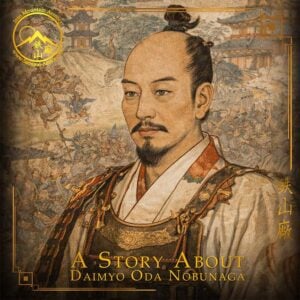
           In the heart of feudal Japan, where the shadows of the past clung to the land like the mist on Mount Hiei, a warrior and visionary named Oda Nobunaga emerged to etch an indelible mark upon the intricate tapestry of the nation’s history. Born in the year 1534 in the picturesque Owari province, Nobunaga’s destiny unfolded amidst the tumultuous winds of change, bringing with it controversy, defiance, and an audacious spirit that would reshape the fate of Japan. Nobunaga, the son of the minor daimyo Oda Nobuhide, inherited not only the wealth and military might of Owari province but also a legacy that transcended the boundaries of convention. His early years were marked by peculiar behavior and a disdain for tradition, earning him the epithet “Owari no Outsuke” or “The Fool of Owari.” In a society where class distinctions were rigidly observed, Nobunaga dared to traverse

Read More »
Yasuke the First African Samurai

Yasuke Le premier Samurai Africain

Dans une culture comme celle de l’ancien Japon, au temps des Samurais, les étrangers étaient souvent tenus à l’écart quand ils n’étaient pas tout simplement ignorés. Sauf dans ces situations rares où il se produit quelque chose de si inhabituel que les normes sont rapidement oubliées et c’est exactement ce qui est arrivé avec Yasuke, le premier Samurai Africain, l’histoire d’une immersion culturelle. Ceci est une interprétation de sa vie que j’ai rédigée avec les recherches et les études que j’ai mené sur ce sujet. L’histoire de Yasuke… Nous savons peu de choses sur le premier Samurai Africain. Selon les archives Historiques, un missionnaire Jésuite Italien nommé Alessandro Valignano qui était le supérieur provincial de l’Inde en 1574 fut plus tard nommé visiteur apostolique des Indes orientales par le Pape Grégoire XIII. Sa mission était d’inspecter ainsi que de soutenir les activités Jésuites en Chine et au Japon. Pendant sa

Read More »
Yasuke the First African Samurai

The First African Samurai

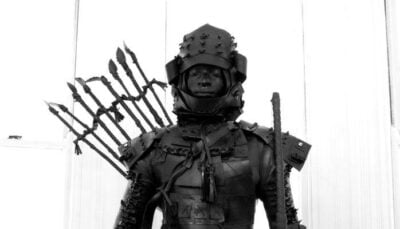
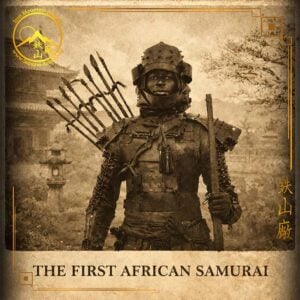
In a culture like that of ancient Japan, outsiders during the time of the Samurai, were usually kept at a distance, if not ignored completely. Except in those rare cases where something so unusual occurs, that the norms get thrown out the window. This was the case with Yasuke, the First African Samurai, a story of cultural immersion.  This is one interpretation of his life from my own research and studies.  The story of Yasuke… Very little is known about the first African Samurai. What we do know is according to historical records, an Italian Jesuit missionary named Alessandro Valignano was the “Provincial of India” in 1574. He was later given the position of “Visitor to the Indies” by Pope Gregory XIII.  His mission was to audit and support the Jesuit activity in China and Japan. During his first visit to Japan (1579 – 1582) he arrived with his publication

Read More »
Learn About Samurai Armor Parts

About Sangu and Sode Armor Parts

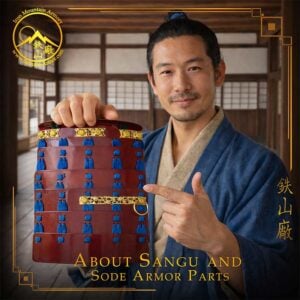
Sangu (often taught as the “three essentials”) are the core pieces that guard a samurai’s limbs: kote (armored sleeves), haidate (thigh guards), and suneate (shin guards). They look like “details” to beginners—until you move in armor. Then you realize: these are the parts that let a warrior stay mobile, keep fighting, and walk away intact. In this guide, we’ll cover the history, battlefield purpose, and evolution of each piece, and we’ll walk through them in the same order they’re commonly donned—like a dojo instructor helping you suit up for the first time. Along the way, you’ll find direct internal links to build your kit piece-by-piece using historically inspired reproductions crafted by Iron Mountain Armory. Browse Samurai Armor Parts (Build Your Set Piece by Piece) Before Sangu: One Key Truth About Samurai Armor If you want to understand why these parts exist, you need one foundational idea: samurai armor began as

Read More »

Samurai Armor Through Time: 5 Key Periods, 5 Fighting Spirits (Heian to Meiji)

Samurai armor isn’t one costume frozen in time—it’s a living genealogy shaped by war, rank, and the reality of steel. If you’re a beginner, this guide gives you a clear map of the five major phases that influence most reproduction designs today. If you’re a collector or martial artist, it helps you “read” a set at a glance: what it’s trying to be, what it prioritizes, and what kind of warrior it’s meant to represent. Click to enlarge. (Image from the original “Samurai Armor Genealogy” post.) Before We Begin: How to Read Armor History Like a Warrior, Not a Tourist Armor history can get messy—because real armor gets repaired, rebuilt, re-laced, and sometimes “updated” by later generations. Add in romantic storytelling, and you’ll see why the same era can look different depending on the source. Victors shape the narrative (and legends grow teeth over time). Survival bias: later-period armors often

Read More »